START HERE
You have the biology.
We'll teach you the tools.
You don't need to know a programming language or any tool names yet. This page will guide you step by step from your first terminal command to analyzing your own sequencing data.
WHO THIS IS FOR
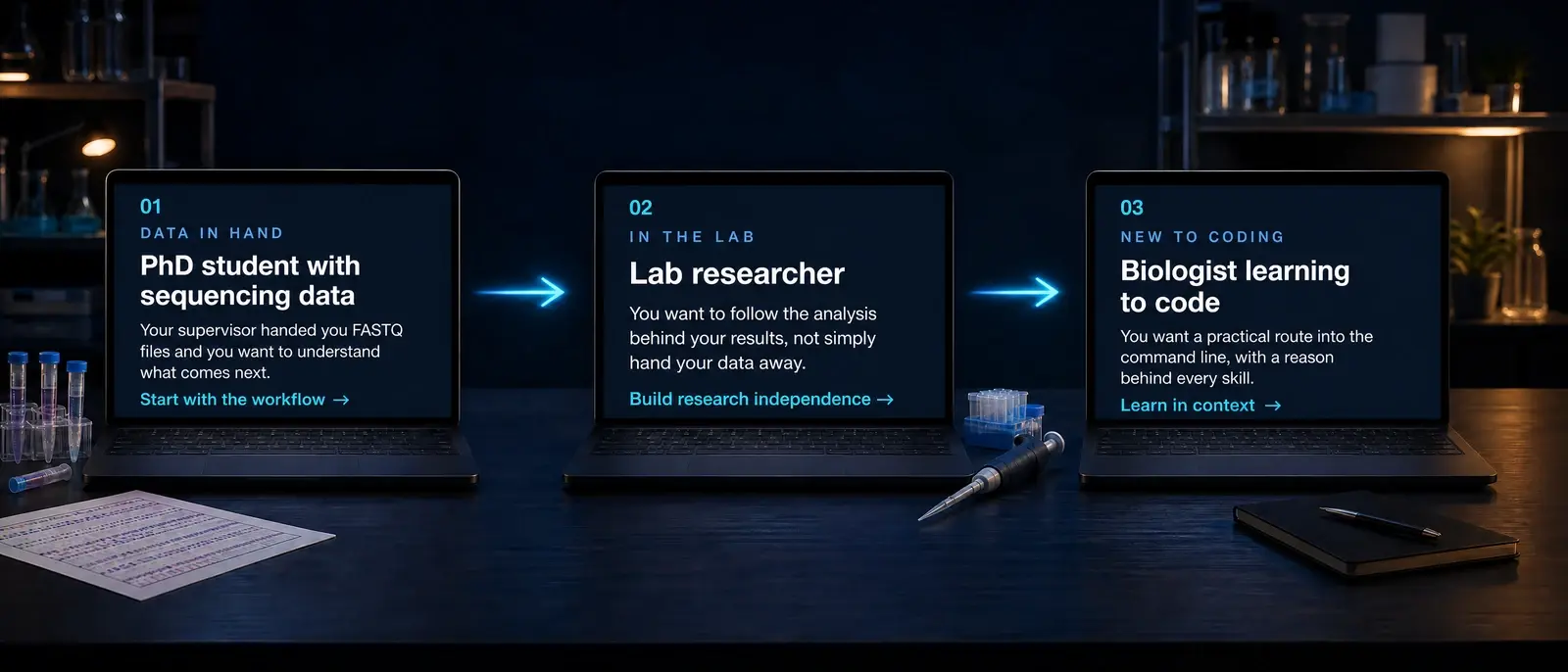
Is this for me?
You do not need to arrive with code or software experience. You only need a biological question worth investigating.
THE FOUNDATION
Master these four skills first.
Complete them in order. Each one builds on the last. When you're done, you'll be ready to work with real biological data on any high-performance cluster.
Understand the Workflow
Learn what bioinformatics is, how data flows from sequencer to results, and how a reproducible pipeline is structured.
Learn the Command Line
Navigate folders, create files, and run tools from the terminal, the language every bioinformatics tool speaks.
Install Software Safely
Use Conda and Mamba to create isolated environments. Never break your system by installing incompatible tools again.
Use a Supercomputer
Connect to an HPC cluster, submit jobs, and run analyses that are too large for a laptop.
CHOOSE YOUR ROUTE
Pick your specialization.
Once you've built the foundation, choose the path that matches your research. Each route is a complete guided learning track.
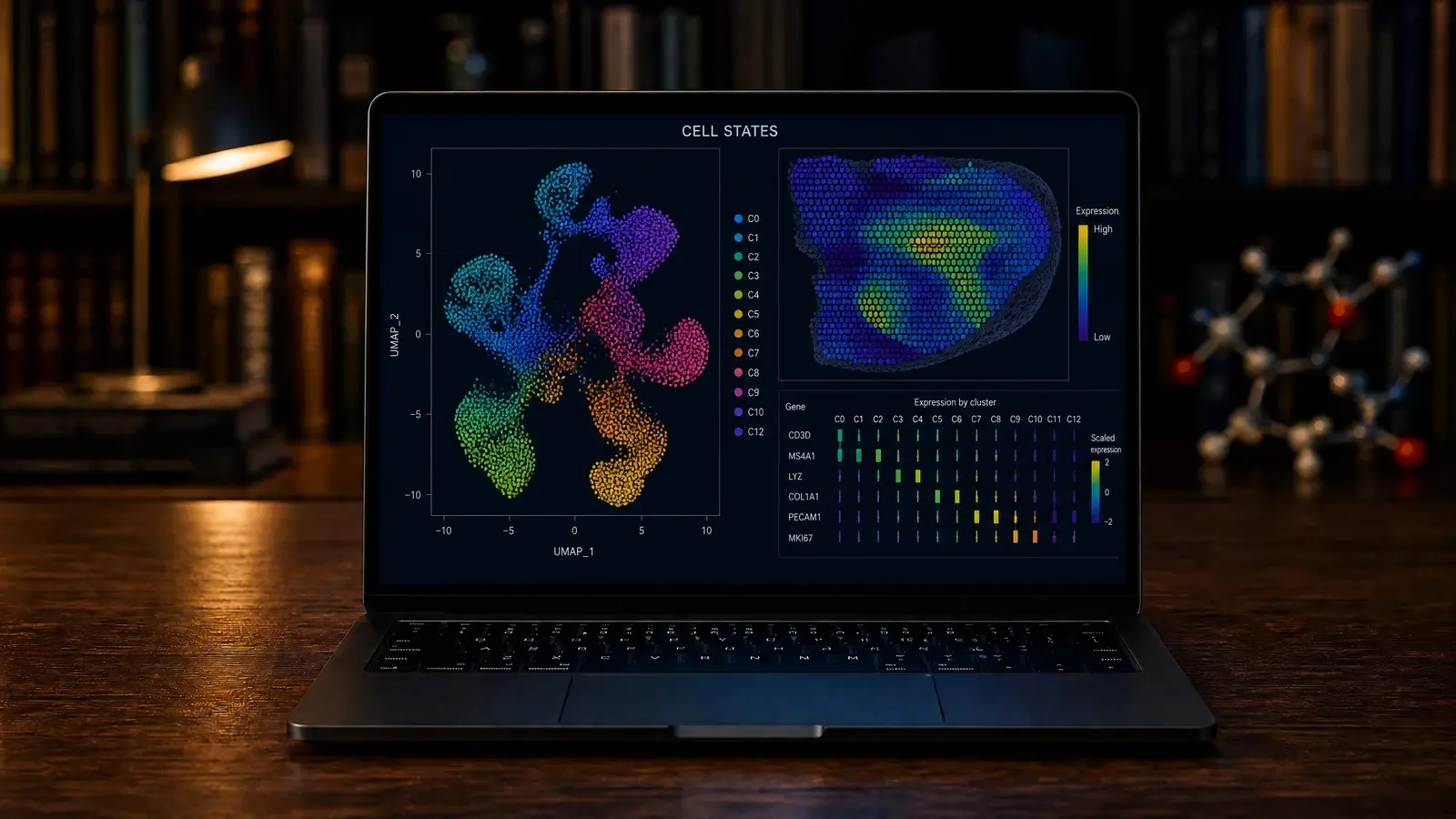
Single-Cell & Spatial Omics
Map cell states, integrate datasets, trace developmental trajectories, and analyze multimodal data.
Start with scRNA-seq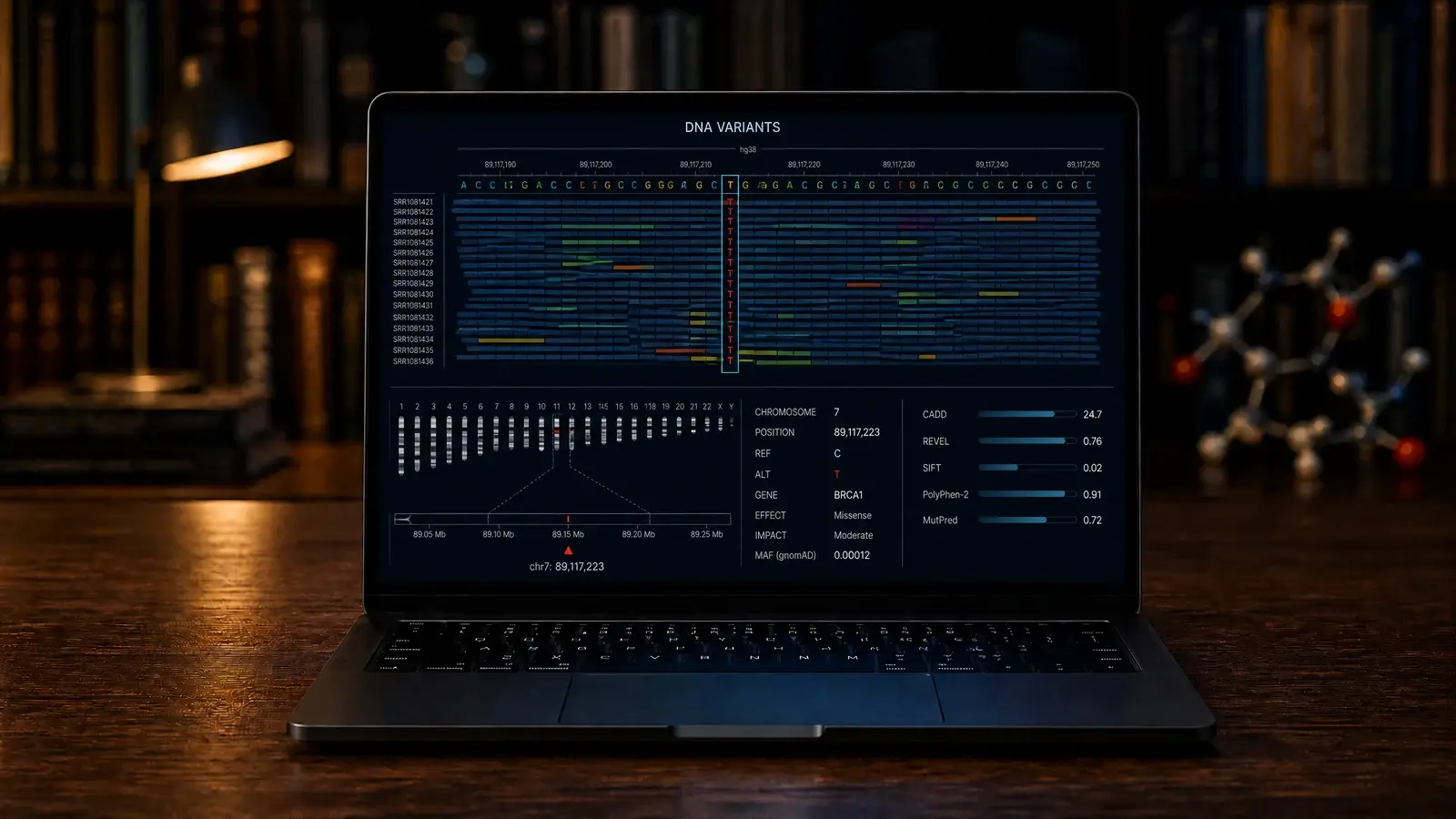
Genomics & Variants
Call variants from whole-exome or whole-genome sequencing, annotate mutations, and explore long-read data.
Start with WES
Microbial Omics
Profile microbial communities, assemble metagenomes, and discover functional pathways in your samples.
Start with 16S rRNA
Evolutionary Genomics
Build phylogenies, identify orthologs, and explore genome-scale evolutionary relationships.
Start with PhylogenyAlready comfortable with the basics?
If you already know the command line and HPC, skip straight to our complete catalogue of hands-on tutorials.